

We aren't saying that Nano second Q-switch NDYag Laser isn't good
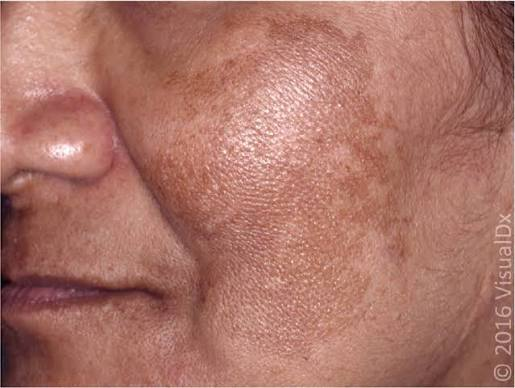
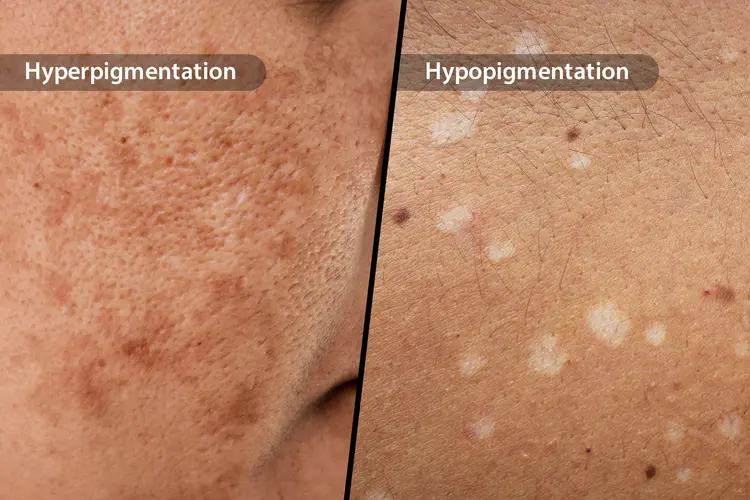
Laser treatment for pigmentation is meant to remove unwanted dark spots, not leave pale ones behind. In our clinic, we have seen a number of patients who came to us, or returned after treatment elsewhere, with hypomelanosis (hypopigmentation): white or pale patches or tiny confetti-like dots where the skin has lost pigment.
This post covers what we have observed and why we do what we do.
1. Hypopigmentation After Q-Switch Laser Sessions
Q-switched lasers (Nd:YAG 1064/532 nm and others) have been the workhorse for pigment removal for years. They work by delivering energy in nanosecond pulses to shatter melanin. They can work well, but in our experience, especially on Asian skin (Fitzpatrick III-V), some patients develop pale lesions after a course of sessions.
Factors that can contribute:
- Cumulative sessions. Melanocytes can become stressed or damaged with repeated treatments, and the problem often shows up only after several sessions.
- Higher fluence or overlapping passes. Chasing stubborn pigment with more energy increases the risk of damaging the melanocytes along with the target pigment.
- Thermal effect. Nanosecond pulses carry more photothermal effect, so more heat spreads to surrounding tissue.
- Sun exposure, post-inflammatory change, and individual skin response.
The result can be punctate or patchy hypopigmentation. It may recover slowly over months, but in some patients it is persistent, and it is far harder to treat than the original pigmentation.

2. The Same Problem with Generic or Counterfeit “Pico” Machines
Picosecond lasers are marketed as the safer, more advanced option. But the market is now full of non-genuine, generic, or counterfeit “pico” devices, often sold cheaply, sometimes in the shell of a well-known brand.
We have seen patients develop the same hypopigmentation after treatment with these machines. Why?
- Their actual pulse duration may not be true picosecond, so they behave more like an ordinary Q-switch.
- Energy output & pulse duration can be unstable or inaccurate. The number on the screen does not always match what reaches the skin.
- There is little quality control, calibration, or service support.
The Dilemma
Operators who suspect their machine is not genuine often respond by turning the power down to avoid side effects. But this creates a dilemma:
- High power gives better pigment clearance but carries a risk of hypopigmentation and other injury.
- Low power is safer for the skin but becomes ineffective. Patients pay for multiple sessions and see little improvement.
Either way, the patient loses. This is the cost of an unreliable device.
3. Our Experience with PicoWay
With genuine PicoWay, we have not faced this dilemma. PicoWay delivers true picosecond pulses, so the effect is mainly photoacoustic (breaking pigment mechanically) rather than thermal. Less heat reaching surrounding tissue means less stress on the melanocytes.
In our clinical experience:
- Good pigment clearance at effective, reliable settings.
- No hypomelanosis problem seen in the patients we have treated, without having to compromise on power.
- Consistent output we can trust, because it is a genuine, calibrated, supported device.
No laser is risk-free, and results still depend on correct diagnosis, proper settings, skin preparation, sun protection, and an experienced operator. But a real picosecond device gives us the margin of safety that Q-switch and fake pico machines did not.
Before You Book Your Laser Treatment
- Ask which device is used and ask to see the machine and its serial number or authenticity details.
- Be wary of prices far below the market. Genuine machines are expensive to buy and maintain.
- Stop and review if you see white patches or dots developing between sessions.
- Protect your skin from the sun before and after treatment.
If you already have hypopigmentation after a previous laser treatment, come in for an assessment. Early evaluation gives you more options.
Disclaimer: This article reflects our clinical observations and is for general information only. Individual results vary. Please consult a qualified doctor for personal advice.
Add comment
Comments