

Not every pigmentation journey is a straight line. Here's a real story from our clinic in Ipoh — including the part where it didn't go perfectly the first time, because that's the part that actually matters.
The concern
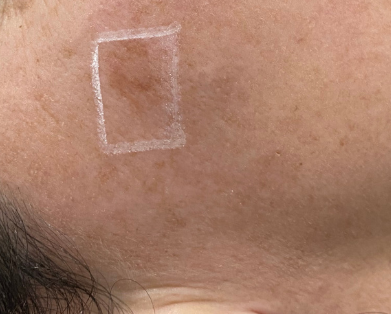
A patient came to us with a 4cm² seborrheic keratosis — a flat, stubborn sunspot — that had been bothering her for years. She wanted it gone, and she wanted a real, lasting result, not just a temporary fade.
She'd already been to several other clinics to ask about a solution, but never felt convinced enough to commit to treatment. At one point she also visited a salon offering "pico" treatment — but she was sharp enough to sense something was off, and walked away. Genuine PicoWay® devices are frequently counterfeited or imitated in Malaysia, so before booking with us, she checked our device registration herself. That's what finally brought her in for a proper consultation.
The treatment plan
During the consult, she was on the fence about downtime. It was her first time doing any laser treatment, and she was worried that higher-energy settings might leave her disfigured. Convincing her of the treatment's safety while genuinely managing her expectations was the harder part of this case — not the laser itself.
We agreed on a plan with roughly 3 days of downtime. Treatment used a combination of wavelengths: 1064nm for the deeper pigment, 730nm toning sessions in between to even out the surrounding skin, and 532nm for the surface — kept deliberately mild at her request. Most clinics rely on a single wavelength, usually just 532nm or 1064nm alone. As this story shows, that's exactly where things can go wrong.
Session 3: it worked — for a while
By her third session, the sunspot was visibly gone. We took an after photo, and honestly, it looked like a clean win.
A few weeks later, it started coming back.
What actually happened
A few things were working against the result:
- The 1064nm, 730nm, and 532nm settings had all been kept conservative, at her request, out of caution over her first-treatment concerns
- Inconsistent sunscreen use between visits
- A sun-soaked beach holiday, sunscreen or not
Pigment doesn't just disappear after a few sessions at low power — it can re-emerge, especially with continued UV exposure and gaps in aftercare. So we went back in. This time, we convinced her to use our own recommended settings across all three wavelengths, more deliberately, to properly manage the regrowth. It meant slightly more downtime, but a far more consistent result. In total, she completed five sessions.
The result
The sunspot faded again — and with the toning sessions properly worked into the plan this time, it's held. Just as important: no scarring, no hypopigmentation.

What we took from it
Pigmentation treatment isn't just "one laser session, done forever." It's a partnership — the right combination of wavelengths and settings on our end, and consistent sun protection on the patient's end. We get it: nobody wants to skip a beach holiday for a skincare routine, and honestly, life's too short not to enjoy the sun sometimes. But if you know a trip is coming up, tell your clinic — we can plan sessions and aftercare around it, instead of around it working against you.
This is exactly why PIFU Clinic doesn't offer generic, fixed-session packages. Every pigmentation case is different, and the plan should flex with what's actually happening on your skin.
Curious if PicoWay® is right for your skin? Book a consultation →
Create Your Own Website With Webador