

If you've been researching acne scar treatments, you've probably come across CO2 laser resurfacing — often called the "gold standard" for scar remodeling. It's a legitimate, powerful technology. But at PIFU Clinic, we've made a deliberate decision not to offer it as our go-to treatment for acne scars in Malaysian patients. Here's the honest reasoning behind that choice.
The Core Problem: Malaysian Skin and PIH Risk
Most Malaysians fall into Fitzpatrick skin type III to IV — skin that tans readily and carries more active melanin than lighter skin types. This matters enormously when it comes to laser resurfacing, because darker skin types are far more prone to a complication called post-inflammatory hyperpigmentation (PIH) — dark patches that form after the skin heals from an injury or inflammation.
CO2 lasers work by creating controlled thermal injury to the skin to stimulate collagen remodeling. That thermal injury is exactly what triggers PIH in melanin-rich skin. A 2025 study published in the Journal of Cosmetic Dermatology puts a hard number on this risk: <cite index="9-1,11-1">up to 92% of patients with Fitzpatrick skin type IV and higher develop PIH following ablative CO2 laser treatment</cite>, and some case series report rates as high as 100% in this group. The same paper notes that <cite index="11-1">while CO2 resurfacing isn't strictly off-limits for darker skin types, its use becomes genuinely difficult because of how often pigmentation complications occur</cite>.
This isn't a fringe finding either. A separate split-face comparison study looking at CO2 laser versus microneedling in skin of color found that <cite index="12-1">21% of Fitzpatrick III patients, 30% of Fitzpatrick IV patients, and 50% of Fitzpatrick V patients developed PIH after fractional CO2 laser treatment</cite> — a clear, rising pattern as skin gets darker, which describes the majority of patients walking into a Malaysian clinic.
The Workaround Doesn't Really Work
Some clinics respond to this risk by simply turning the power down for darker-skinned patients. It sounds sensible, but it creates a different problem: you lose the very thing you came in for. CO2 resurfacing needs a certain depth and intensity of injury to actually remodel collagen and improve scar texture. Dial that down to avoid PIH, and you're often left with a treatment that's safer but noticeably less effective — you've reduced the risk, but also reduced the result you were paying for.
The Downtime Reality
Even when PIH is avoided, CO2 laser recovery is genuinely long:
- Initial wound healing: roughly 1 month before the treated skin has properly closed over and stabilized
- Residual redness: it's common for lingering redness (erythema) to persist for up to 9 months or longer after that
- During this window, patients are often dealing with visible redness, sun sensitivity, and social self-consciousness — a heavy trade-off for a result that, in higher Fitzpatrick types, may end up compromised anyway by the power reduction needed to manage PIH risk
For most people balancing work, family, and daily life in Malaysia's climate, that's a hard ask — and in our view, often not proportionate to the improvement actually delivered.
Our Solution: PicoWay Resolve
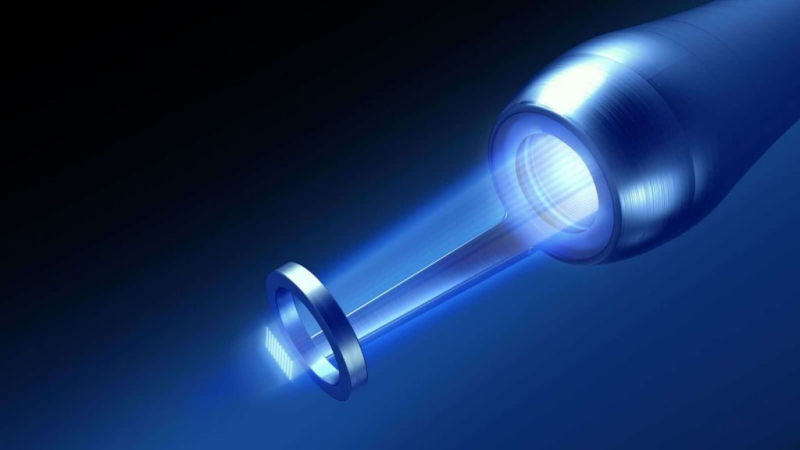
Instead, we use PicoWay Resolve, run at higher energy settings, as our primary tool for acne scar remodeling. It works on a fundamentally different principle — rather than heating the skin (photothermal), it uses ultra-short picosecond pulses that create a photoacoustic effect below the skin's surface, leaving the outer skin layer largely intact.
What this means clinically:
- Lower PIH risk — because there's no sustained thermal injury driving melanocyte overstimulation, the mechanism that causes most CO2-related PIH is largely avoided
- Meaningfully shorter downtime — around 7 days, compared to the month-plus recovery and prolonged redness seen with CO2
- No residual redness in most cases, versus redness that can linger for the better part of a year with CO2
- Real, published efficacy — a study in Lasers in Surgery and Medicine (2017) using the PicoWay Resolve fractional handpiece across a series of monthly treatments found <cite index="15-1">an average 28% improvement in acne scar appearance, with the majority of patients showing measurable improvement and high satisfaction rates</cite>
An Important Caveat
Not every "picosecond laser" is equal here. PIH-favorable, fractional acne scar treatment specifically requires a fractional handpiece mode — like the Resolve handpiece on the PicoWay platform. A standard picosecond laser without this fractional delivery system won't replicate these same results or safety profile. If a clinic is offering "picolaser for acne scars" without specifying the handpiece or fractional capability, it's worth asking directly what technology is actually being used.
Our Bottom Line
We're not saying CO2 laser has no place in aesthetic medicine — it remains a genuinely effective tool for certain patients and certain scar types, particularly in lighter Fitzpatrick skin. But for the Malaysian population we treat day to day, the risk-reward math consistently favors a technology built for our skin type from the start, rather than a powerful tool we'd have to compromise to make safe.
Our approach has always been: proper diagnosis first, then the treatment that fits your skin — not the treatment that's trending.
References
- Hang, et al. "A Novel Peel to Prevent Post-Inflammatory Hyperpigmentation After CO2 Resurfacing for Acne Scars." Journal of Cosmetic Dermatology, 2025. https://onlinelibrary.wiley.com/doi/10.1111/jocd.70366
- "Evaluating the Pros and Cons of Fractional CO2 Laser Versus Microneedling in Atrophic Acne Scars in the Skin of Color: A Split Face Study." PMC. https://pmc.ncbi.nlm.nih.gov/articles/PMC11616935/
- Bernstein EF, et al. "Picoway Resolve Effective for Acne Scars." Lasers in Surgery and Medicine, November 2017 — summarized via MedEsthetics. https://www.medestheticsmag.com/news/article/21147734/picoway-resolve-effective-for-acne-scars
Create Your Own Website With Webador